Getting stronger is an obvious goal when you first start lifting. Building a strength foundation in your formative lifting years sets up gains and helps you reach your ultimate potential. While many of us aren’t chasing strength our entire lifting career (Rich didn’t), it’s helpful to have a strength goal to compare yourself to or aspire to, especially when you’re first starting out. This article will give you that as well as define important terms, and touch on some factors that affect strength.
Let’s Take A Quick Look At Genetics
Your genetics play a major role in how big and strong you can get. Thank your parents for that because you inherit your bone structure, your frame, and several other factors that affect your results. For our purposes, your genetic potential is how big and strong you can get before aggressive supplement enhancement. Even then, there is still a limit.
Remember that strength helps you build a foundation, but when you reach a certain point, it’s time to follow Rich’s advice - switch over to moderate weights for higher reps.
Two Types of Strength
Let’s define two main types of strength. The first is absolute strength, which is the amount of weight you can lift a single time (1RM). Relative strength is the amount of weight you can lift relative to your body weight, or how strong you are for your size.
Factors That Affect Strength
Of course, there are other factors that affect strength. They include:
- Age - Your strength and mass declines as you age.
- Body Composition - The more muscle you have, the stronger you should be because you should be able to exert more force.
- Height - The taller you are, the farther you have to move the weight, which may affect strength.
- Tendon Insertions - The distal end of a tendon is the insertion point, or where it connects to bone. The proximal end is called the origin. The location of the insertion point can affect strength.(1,2)
Strength Standards
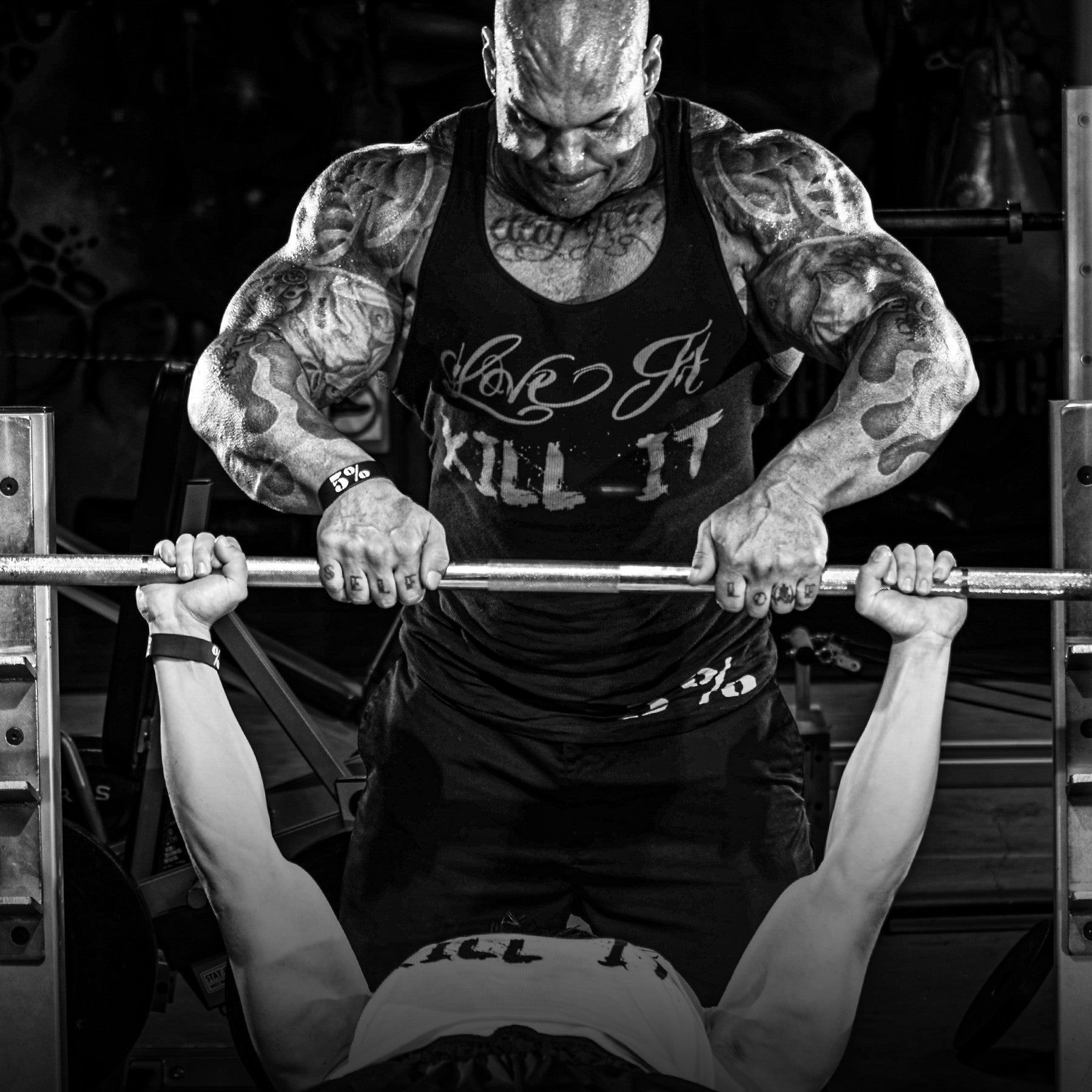
Let’s look at some basic strength standards for men and women. We’ll look at the Squat, Leg Press, Deadlift, Incline Bench Press (a Rich favorite), and Bench Press.
WOMEN
Beginner - Defined as someone training for 6 months to a year.
- Bench Press: 0.5 x bodyweight
- Incline Bench Press: 0.4 x bodyweight
- Deadlift: 1 x bodyweight
- Squat: 0.75 x bodyweight
- Leg Press: .6 x bodyweight
Intermediate - Someone training for 1 -3 years.
- Bench Press: 0.75 x bodyweight
- Incline Bench Press: 0.5 x bodyweight
- Deadlift: 1.5 x bodyweight
- Squat: 1 x bodyweight
- Leg Press: 2 x bodyweight
Advanced - Someone training for 3 years or longer.
- Bench Press: 1 x bodyweight
- Incline Bench Press: .75 x bodyweight
- Deadlift: 2 x bodyweight
- Squat: 1.5 x bodyweight
- Leg Press: 2.75 x bodyweight
MEN
Beginner - Defined as someone training for 6 months to a year.
- Bench Press: 1.25 x bodyweight
- Incline Bench Press:
- Deadlift: 1.75 x bodyweight
- Squat: 1.5 x bodyweight
- Leg Press: 1.2 x bodyweight
Intermediate - Someone training for 1 -3 years.
- Bench Press: 1.5 x bodyweight
- Incline Bench Press: 0.8 x bodyweight
- Deadlift: 2.25 x bodyweight
- Squat: 1.75 x bodyweight
- Leg Press: 2 x bodyweight
Advanced - Someone training for 3 years or longer.
- Bench Press: 1.75 x bodyweight
- Incline Bench Press: 1.1 x bodyweight
- Deadlift: 2.75 x bodyweight
- Squat: 2 x bodyweight
- Leg Press: 3 x bodyweight
About These Numbers
These numbers are generalizations, they are not carved in stone. If you can lift that much or more, great! If not, you have goals to work towards. Where did these numbers come from? Strength standards come from powerlifting organizations to rank competitors. Different coaches may also use similar standards. Our numbers do not come from a single source but are averages based on the strength standards of several powerlifting coaches and organizations.
Recap
As noted, you should build a strength foundation in your first few years of training. Once you’ve reached a limit, switch to moderate weights and higher reps. Throughout this process, 5% Nutrition has the supplements you need, from pre-workouts to creatine, All Day You May, Real Carbs, and protein. Stock up, eat lots of real food, and chase your strength goals!