



Most likely your goal is more mass, but regardless of your goal, understanding muscle fiber types and how they work can help you optimize your training program. In this article, we’ll look at muscle types, how they are different and how to use that information to get more out of your training, plus, we’ll suggest the 5% Nutrition supplements that can help.
Muscle Fiber Types
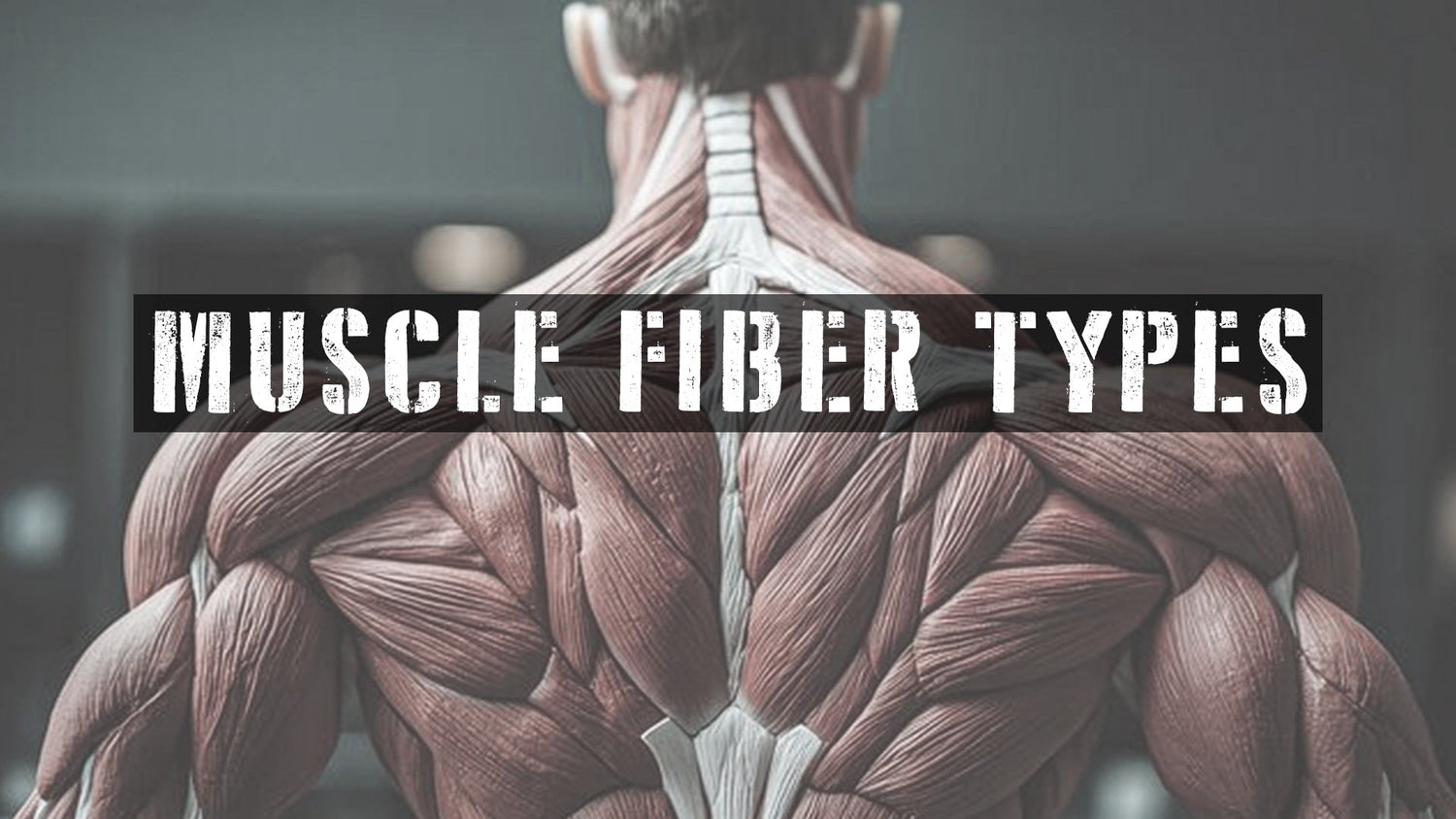
Any conversation about building muscle has to include the different types of muscle fibers and their recruitment. The different types and the rep ranges required to train them are a key part of effective routines. Understanding and applying this concept ensures complete development. Basically, there are three types of muscle fibers:
Slow Twitch Fibers
Type 1
These fibers are slow to contract. They are primarily endurance fibers and have limited size and strength capacity. Slow twitch fibers require oxygen to function and have a high amount of mitochondria which aid in their oxidative metabolism (or, use of oxygen). They also have a greater number of capillaries, which means they are better for nutrient delivery. These types of fibers are resistant to fatigue but produce a low level of force output. They respond best to reps in the 15-20 range.(1,2)
Fast Twitch Fibers
Fast Twitch Fibers are divided into two categories: type IIa and type IIb. Fast twitch fibers produce the most muscle strength and have the best growth potential. They are the fibers primarily responsible for muscle size. However, they also have a slower rate of nutrient replenishment due to having less capillaries than slow twitch muscle fibers. They seem to respond best to reps in the 6-8 range.(1,2)
Type IIa:
These fibers promote explosive power for a very limited time. This makes them ideal for weight training, specifically heavier compound exercises. These fibers rely heavily on the glycolytic energy system, which is an energy system that uses the method of anaerobic glycolysis to produce ATP. Compared to slow twitch fibers, type IIa fibers are less resistant to fatigue, produce more muscular force, and contract at a faster speed than slow twitch fibers.
Type IIb:
The type IIb fibers are the fastest twitch fibers but also fatigue the fastest. They are responsible for the most power. These fibers are involved in any activity that requires an all-out burst of power; they act for a very short timeframe, typically around 7.5 milliseconds.(1,2)
Muscle Fiber Recruitment
Muscles produce force by recruiting motor units, which can be defined as a group of muscle fibers stimulated by a motor neuron. Regardless of workout intensity, slow-twitch motor units are recruited first. If workout intensity is low, these motor units could be the only ones recruited. What if workout intensity is high, such as when lifting heavy weights or using intensity techniques? Then slow- twitch motor units are recruited first, followed as needed by fast-twitch IIa and fast- twitch IIb.
Practical Applications
Slow-Twitch Muscle Exercises
During weight training sessions, lift lighter loads (below 70% 1RM) using 12-20 reps. Rich often trained this way later in his career.
Fast-Twitch Muscle Exercises
To stimulate fast-twitch muscle fibers, lift heavier loads (more than 70% 1RM) using 1-12 reps. If you prefer, you can use lighter weight with explosive rep performance. This is another technique Rich used. As well, he would often perform pyramid sets beginning with 25-30 reps, then progress down in reps while adding weight. Sometimes, he would perform an isolation exercise and, using moderate weights, perform a predetermined number of sets and reps. For example, he might do 4 sets of 20 reps. The goal is to focus on stimulating fast twitch fibers by training hard enough, either by using heavier loads, lifting explosively on the concentric phase of the rep, and/or using intensity techniques such as drop sets, supersets, or rest-pause.
Don’t Forget 5% Nutrition
When the talk turns to training and supplements, the best place to start is 5% Nutrition pre-workouts. We have a pre-workout for everybody, starting with Code Red PRE, the best choice for beginners. From there we have the updated, more hardcore than eveKill It, the powerful Kill It RTD, the mind-blowing high stim 5150 and our legendary stim-free Full As F*ck.
From there, don’t forget post-workout nutrition, which could be Real Carbs and our classic Egg White Crystals and our innovative muscle builders. Stop by 5% Nutrition, check out our new site and all our market-leading products!
References:
- Types of Muscle Fiber | Athlepedia, The Athletics Wiki | Fandom
- Muscle Fiber Types Body Types | Northeast Texas Community College (ntcc.edu)